

The blockchain games industry is still in its early stages of development, but it is growing rapidly. In 2022, the global blockchain gaming market was valued at $4.6 billion and is expected to reach $65.7 billion by 2027. So, what is blockchain games?
Blockchain games, also known as crypto games, are video games that use blockchain technology to offer a decentralized and transparent gaming experience. In these games, players can own in-game assets and earn cryptocurrency by completing various tasks and challenges. The decentralized nature of the blockchain ensures that all transactions within the game are secure, transparent, and tamper-proof. This means that players can trust that their assets are safe and that the game is fair.
Crypto games can vary in genre and complexity, from simple puzzle and strategy games to Massive Multiplayer Online Role-playing Games (MMORPGs). Some popular examples of these games include CryptoKitties, Gods Unchained, and Axie Infinity. In this article, we will discuss how do blockchain games work, their history, and the advantages of playing them. We also took some information from https://www.blockchain.com/podcast to ensure we give you detailed and updated data on the blockchain industry. Let’s dive in.
What is The History of Blockchain Games?
Blockchain games history can be dated back to 2014. This is when the first crypto game, Huntercoin, was released on Bitcoin blockchain. Players would compete against each other for rewards by collecting coins and killing other players. This crypto game was groundbreaking at the time because it showed the potential for blockchain technology to be used in new and innovative ways beyond just financial transactions.
Since then, crypto games have continued to evolve and grow in popularity. In 2017, CryptoKitties was released, a game where players could collect, breed, and trade unique digital cats on the Ethereum blockchain. The game became incredibly popular and caused congestion on the network due to the high volume of transactions.
In 2018 Axie Infinity was released as a blockchain-based video game that allowed players to collect, breed, and trade unique digital creatures called “Axies.” Since its release, it has gained a large following and has become one of the most popular crypto games, with over 1 million daily active users and a thriving marketplace for Axie NFTs. Other games that came later were The Sandbox and Gods Unchained.
Overall, blockchain games are still in their early stages but offer a new level of ownership and transparency to players, as well as the potential for innovative gameplay and rewarding experiences. As the technology continues to evolve, we will see even more exciting blockchain games emerge in the future.
Features of Blockchain Games
Now that we’ve looked into blockchain games history let’s dive deeper to understand some key aspects of these games.
- Ownership of Assets. In traditional games, players don’t truly own their in-game items or characters, as the developer can revoke or restrict access. But in these games, players have true ownership of their assets, recorded on the blockchain. Hence this ownership allows them to freely buy, sell, and trade their items with other players.
- Decentralization. Blockchain games are built on decentralized networks, which means that a single entity or organization does not control them. This allows for greater transparency and security in the game’s transactions.
- NFT Integration. Non-fungible tokens (NFTs) are unique digital tokens that represent ownership of a specific asset or piece of content. For example, blockchain games often utilize NFTs to represent rare or valuable in-game items. NFTs ensure the scarcity and uniqueness of these assets, and their ownership can be easily verified and transferred.
- Play-to-earn Mechanics. Some crypto games incorporate play-to-earn models, where players can earn cryptocurrency or other valuable in-game assets by actively participating. This can include completing quests, participating in competitions, or contributing to the game’s ecosystem.
Blockchain Games Vs. Casino Games
Blockchain games and casino games are both forms of online gaming that allow players to win money or rewards. However, casino games are typically operated by centralized companies, which means that the games are not as secure as blockchain games. Additionally, they do not allow players to own their in-game assets truly. Despite the differences, playing Bitcoin games at https://bitcoincasinotop.com/bitcoin-gambling-games/ still offers an exciting and thrilling experience. You will enjoy more bonuses, security, anonymity, and fast transactions. It is important to be aware of the risks involved since the value of Bitcoin is volatile, which can impact your winnings or losses.
Benefits of Playing Blockchain Games
As you have seen before, blockchain games are different from the traditional games we are used to. Some of the benefits include;
- Ownership. Here players can own their in-game assets, which means they can trade them with other players or sell them for real money. This gives players more control over their gaming experience.
- Transparency. Blockchain transactions are transparent, so players can see how their in-game assets are used. This, therefore, helps to prevent fraud and scams.
- Equity. Crypto games can create a more equitable gaming environment by giving players the opportunity to earn money by playing. This could level the playing field for players from all walks of life.
- Security. Blockchain technology ensures that all transactions within the game are secure and tamper-proof, reducing the risk of hacks and fraud. This enhances the overall fairness and trustworthiness of the games.
- Unique Gaming Experiences. Due to the decentralized nature of blockchain games, developers have the freedom to create unique gaming experiences that may not be possible with traditional centralized games.
- Interoperability. Crypto games are often interoperable, meaning players can use their in-game assets in other games. Thus this gives players more flexibility and allows them to build a more valuable collection of assets.
- Social Interactions. These games often incorporate social features like player communities, chat systems, and multiplayer gameplay. As a result, players can interact with each other, form alliances, trade assets, and participate in shared experiences.
Drawbacks of Playing Blockchain Games
While there are many advantages to playing blockchain games, there are also some drawbacks.
- Complexity. Blockchain games can be technically complex, making them difficult to learn and play. This can be a barrier to entry for some players, especially those who need to become more familiar with blockchain technology.
- High Volatility. The value of in-game assets may fluctuate based on market demand, player interest, and the broader cryptocurrency market. This volatility can affect the perceived value and financial outcomes for players.
- Security Risks. Crypto games are still in their early stages of development, and they are susceptible to security risks. This is because blockchain technology is relatively new and there are still some vulnerabilities that hackers can exploit.
- Regulatory and Legal Uncertainty. The regulatory environment surrounding blockchain games and cryptocurrencies is still evolving in many jurisdictions. This can create uncertainties and potential legal issues., i.e., Players might be unable to recover their losses if they are scammed or hacked.
- High Entry Costs. Some crypto games require players to purchase in-game assets, such as NFTs. This can be a barrier to entry for some players, especially those new to blockchain technology.
Blockchain Games For ios and Android
There are several blockchain games you can enjoy on ios and Android devices, For example;
- CryptoKitties. This game allows players to collect, breed, and trade unique digital cats on the Ethereum blockchain. It was one of the first blockchain games to gain widespread popularity.
- Axie Infinity. Axie Infinity is a blockchain-based game combining pet collection, battling, and trading elements. Players can own and breed cute Axies creatures, participate in battles, and earn cryptocurrency rewards.
- Gods Unchained. Gods Unchained is part of the blockchain games on Android that uses NFTs to represent unique cards on the Ethereum blockchain. Players can buy, sell, and trade cards to build their decks and compete against other players.
- The Sandbox. The Sandbox is a virtual world-building game where players can create and own their unique voxel-based creations on the Ethereum blockchain.
- My Crypto Heroes. My Crypto Heroes is an RPG-style blockchain game. Here players collect and battle with historical figures and heroes. It features battles, quests, and the ability to trade heroes on the Ethereum blockchain.
- Crazy Defense Heroes. This is a tower defense game where players can collect and upgrade towers to defend their base from waves of enemies. The game is built on the Binance Smart Chain and uses the $CHZ token as its native currency. It is available on iOS and Android devices and features colorful cartoon graphics and engaging gameplay.
- Decentraland. Decentraland is a virtual reality (VR) world built on the Ethereum blockchain. Players can explore the decentralized metaverse, own virtual land, and create and trade various assets within the virtual world. Note that this is a 3D virtual world browser-based platform.
- Revv Racing. REVV Racing is a blockchain-based racing game where players can purchase, collect, and trade NFTs representing cars, tracks, drivers, and other in-game items. These NFTs are unique and are stored on the Ethereum blockchain, meaning that no two NFTs are exactly alike.
- Illuvium. Illuvium is a blockchain-based RPG where players can capture and train monsters (illuvials) and use them to battle against other players. The game features impressive graphics and offers a deep and engaging gameplay experience.
These are just a few examples of the many blockchain games available on iOS and Android devices. With the continued development of blockchain technology, we can expect to see even more innovative and engaging blockchain games.
Blockchain Browser Games
Blockchain browser games are online games that utilize blockchain technology and are accessed through web browsers on various devices such as desktops, laptops, smartphones, and tablets.
These games are designed to be played directly within the browser without additional downloads or installations. This, therefore, eliminates the need for specialized gaming hardware or software.
If you are interested in playing blockchain browser games, there are several ways to get started. You can find a list of games on the following websites:
- DappRadar. DappRadar is a website that tracks the dapp (decentralized application) market. In addition, the website has a list of all of the blockchain browser games that are currently available.
- CoinMarketCap. CoinMarketCap is a website that tracks the cryptocurrency market. While it does not offer blockchain games directly, it does provide information on various blockchain games and their associated tokens.
Once you have found a game you want, you can download the game’s client and create an account. You will then need to purchase some of the game’s tokens to start playing.
How to Build Blockchain Games
If you have been pondering how to build blockchain games, then this section will significantly help you. But first, it’s important to note that building blockchain games requires game development expertise, knowledge of blockchain technology, and a thorough understanding of the chosen blockchain platform.
Similarly, collaboration with blockchain developers and leveraging available resources, such as blockchain development tools, will help streamline the development process. However, the basic steps of how to build blockchain games are as follows;
- Define the Game Mechanics. Determine what kind of game you want to create and how you want it to function. This includes deciding on the game’s rules, objectives, rewards, and user interface.
- Choose a Blockchain Platform. There are many different blockchain platforms, such as Ethereum, EOS, and TRON. Each platform has its strengths and weaknesses, so it’s important to research and choose one that best suits your game’s needs.
- Develop Smart Contracts. Smart contracts are self-executing programs that run on the blockchain. They are used to define the game’s rules and manage in-game assets. You will need to develop smart contracts using a programming language such as Solidity.
- Develop the Game Backend. Build the backend infrastructure of your game, which includes connecting to the blockchain network, handling transactions, and managing player data.
- Design the User Interface. Create a user interface that allows players to interact with your game. This can include a website, mobile app, or desktop application.
- Integrate Wallets. To enable blockchain interactions and asset ownership, integrate digital wallets. This lets players connect their wallets to the game, manage their assets, and securely sign transactions.
- Test and Deploy. Test your game thoroughly to ensure it works as intended, is secure, and is free of bugs. Once you’re confident it’s ready, deploy the game to the chosen blockchain platform.
- Market and Promote. Once your game is live, you must market and promote it to attract players. Use social media, online forums, and other marketing channels to reach your target audience.
- Community and Support. Foster an active community around your game, support players, and regularly update the game with new features, content, and improvements based on player feedback.
Conclusion
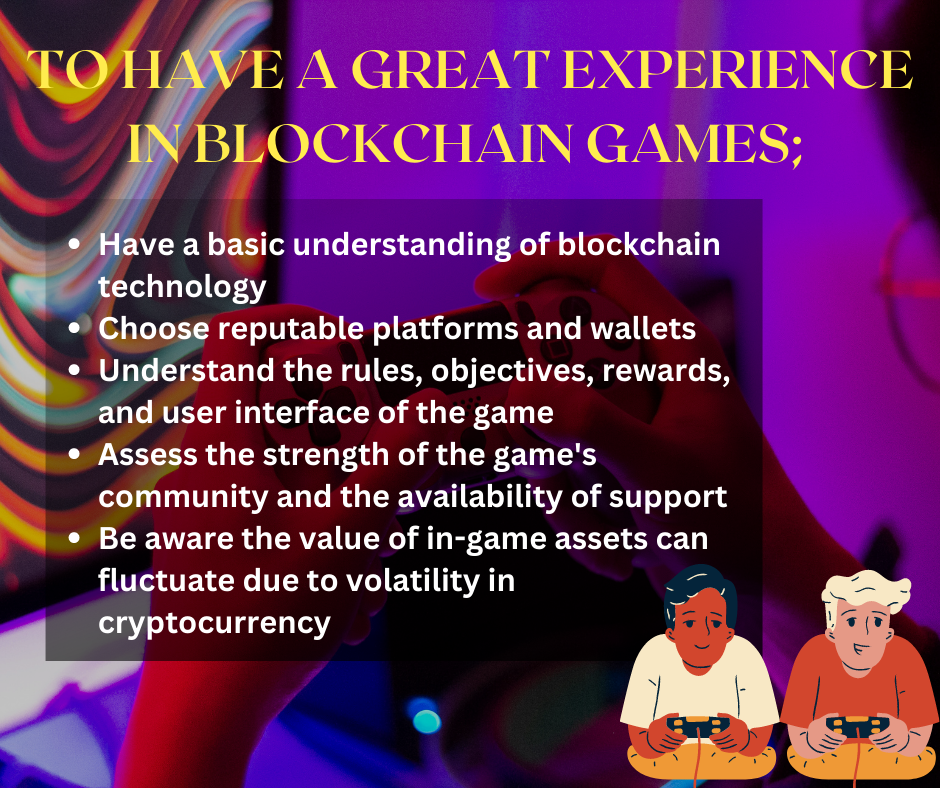
In this article, we have discussed what is blockchain games and the advantages of playing them. We have also looked at how do blockchain games work, stating that they allow for the creation of secure and transparent systems where game assets, such as in-game items, characters, and virtual land, can be owned, traded, and tracked. Crypto games have continued to gain popularity as they offer a unique gameplay experience. On the other hand, they can be more complex than traditional games due to blockchain technology and the need to manage in-game assets. Therefore before playing, have a basic understanding of the technology and understand the game’s rules, objectives, rewards, and user interface. If you prefer having an easy and smooth experience, you can go for blockchain browser games played directly from a browser.